

Embroidery backing or embroidery stabilizer is a very important component used in the sewing process of your design. Embroidery backing and embroidery stabilizer are 2 terms that mean exactly the same thing. In the commercial part of the industry it has always been known as embroidery backing. However, in the home embroidery market it has been known as embroidery stabilizer. That is why I have used both backing and stabilizer in all of my material on embroidery backings. I want to use the term that is most familiar to you.
 To watch the videos in full-screen mode, click on the “Enter Full Screen” icon on the right bottom corner of the video.

Video: Embroidery Backings And Toppings
Embroidery Backing is used to give the garment stability as you are applying your embroidery. Backing is also known as stabilizer. Using the proper backing prevents puckering around the embroidery. Most fabrics will stretch as they are being hooped and it is very important to avoid stretching them, even a small amount.
If the fabric is stretched to much during hooping, it will create puckers around the finished embroidery. Using the correct backing or stabilizer for the garment is extremely important for high quality finished products.
Video: Embroidery Backing & Embroidery Topping For Knit Fabrics
On some fabrics you can use one layer of cut-away and one layer of tear-away, but you must experiment using the different combinations to see if this is working and still gives you the same quality and crispness that you have with two layers of cut-away.
On Performance Wear or the Moisture Wicking Fabrics, I use 2 layers of No Show backing and 1 layer of 1.5 oz. crisp tearaway backing.
I also use 1 layer of water soluble topping or film on the surface of most of my knit garments including performance wear. This helps keep the embroidery on the surface of knit fabric rather than sinking into it.
Video: Embroidery Backings/Stabilizers For Woven Fabrics
Tear-away embroidery backing or tear-away embroidery stabilizer is used on all woven fabrics such as denim, chambray, twill, cotton oxford dress shirts, nylon oxford, canvas, bags, aprons, flags, sheets, pillowcases, tablecloths, napkins, etc. It is also used on towels and washcloths. I have found that a 1.5 oz weight has worked best for almost all of my applications using the tear-away backing. As a general rule I use 2 layers of the 1.5 oz tearaway backing.
If you find that your lettering or fine detail in your embroidery design is not as crisp or sharp as you want it to be, you can slide another layer of the tearaway backing under the hoop before the machine starts. Do not hoop 3 layers of the backing inside of the hoop. It does not work as well.
It is important not to use Cutaway backing on woven fabrics. The backing will shrink when it is laundered and will cause the shirt to pucker after it has been placed in the dryer.
Video: How To Use Embroidery Topping As Embroidery Backing
Embroidery Topping, also known as soluble film or by the brand name Solvy, can be used as an embroidery backing or embroidery stabilizer for very delicate applications such as wedding gown skirts, linen handkerchiefs, light colored silk fabrics and also for items such as fleece blankets where you do not want the backing to show. It also works great on the Fleece headbands and mittens. I have even used it on knit stocking caps where I wanted all of the stretch left in the cap. This type of application will all depend on the knit fabric. You must experiment first.
The heavy topping or Solvy, also known as Badgemaster, is used to make stand alone lace. I have also used it very successfully for all types of Christmas ornaments. You have to experiment with it. Sometimes 1 layer will work and sometimes you will need 2 layers. Do not try to make lace ornaments with the light weight topping, the thread and topping can get sucked down through the hole in the throat plate into the hook area of the machine causing a huge mess! Ask how I know that one?
Article: Embroidery Backings/Stabilizers/Toppings
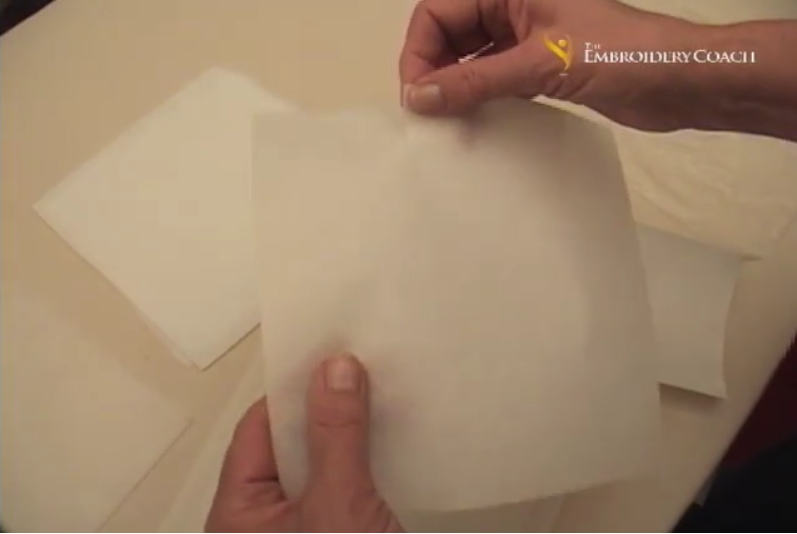
There are basically two categories of embroidery backings or stabilizers. Within these two categories, depending on the type of garment you will be applying your embroidery to, there are different types that you need to carry in your inventory. In this article, I explain the difference in the types of backings and what they are used for. I also give you some tips about using the embroidery backings. Print this out and put it in your Embroidery Information Binder.
Link to Article: Backings and Toppings
Article: My Favorite Backing And Toppings Recipes
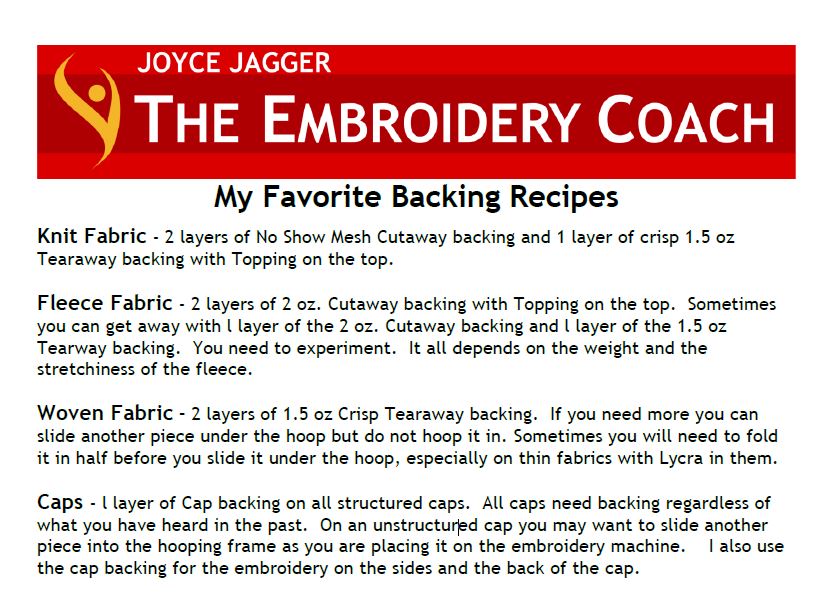
I would like to share my Favorite Backing Recipes with you. Download and print this out so you will have it for the style numbers when you place your order through Cristall Threads.